Winter at Buda: Discovering a family story in the garden
By Kate Anderson
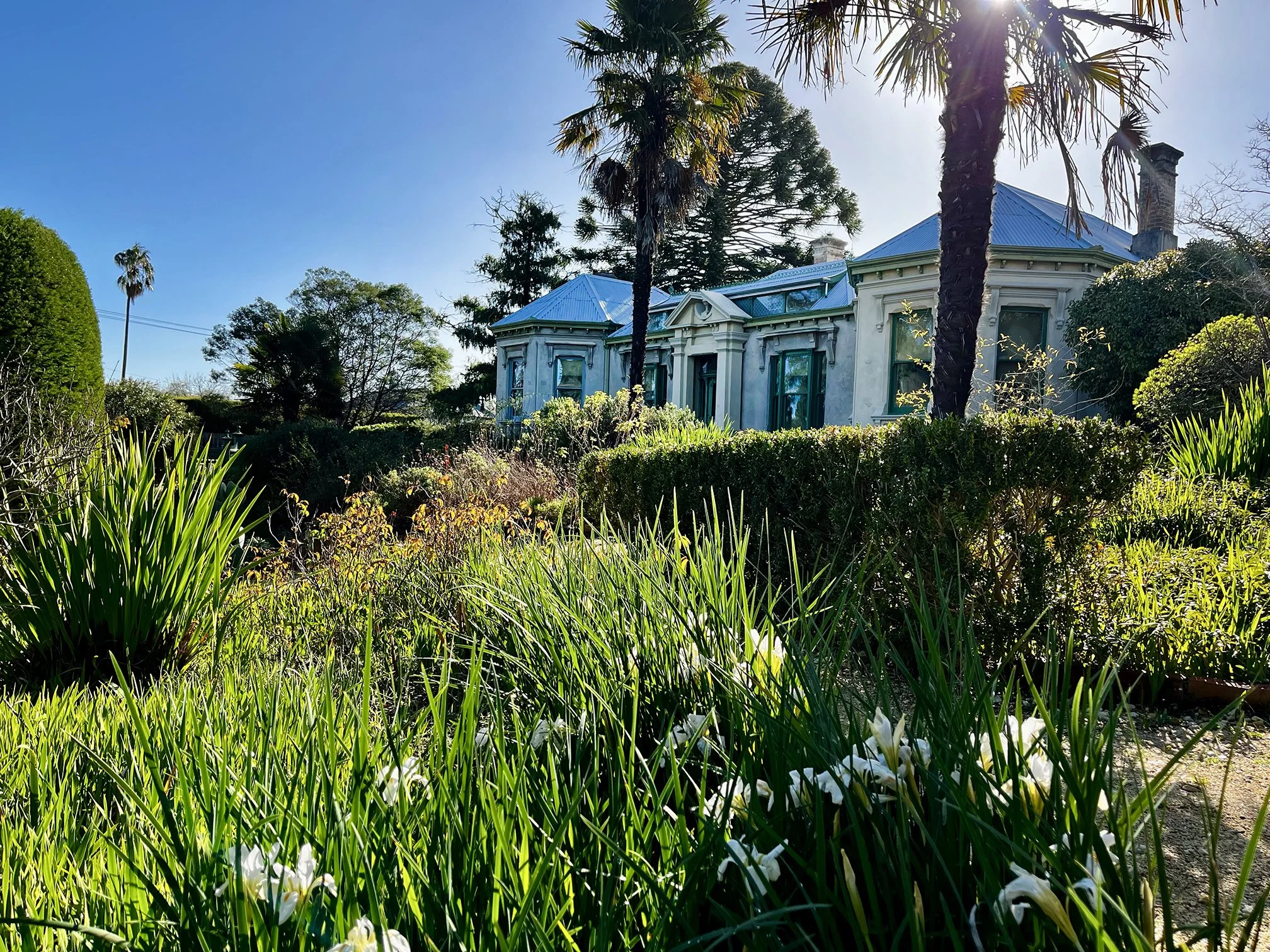
On a sunny early winter day, I wandered through the gates of Buda in Castlemaine, expecting to visit a historic garden. What I found was something much more personal: a place where a family's story still lives among the trees, paths and plantings they nurtured over generations.
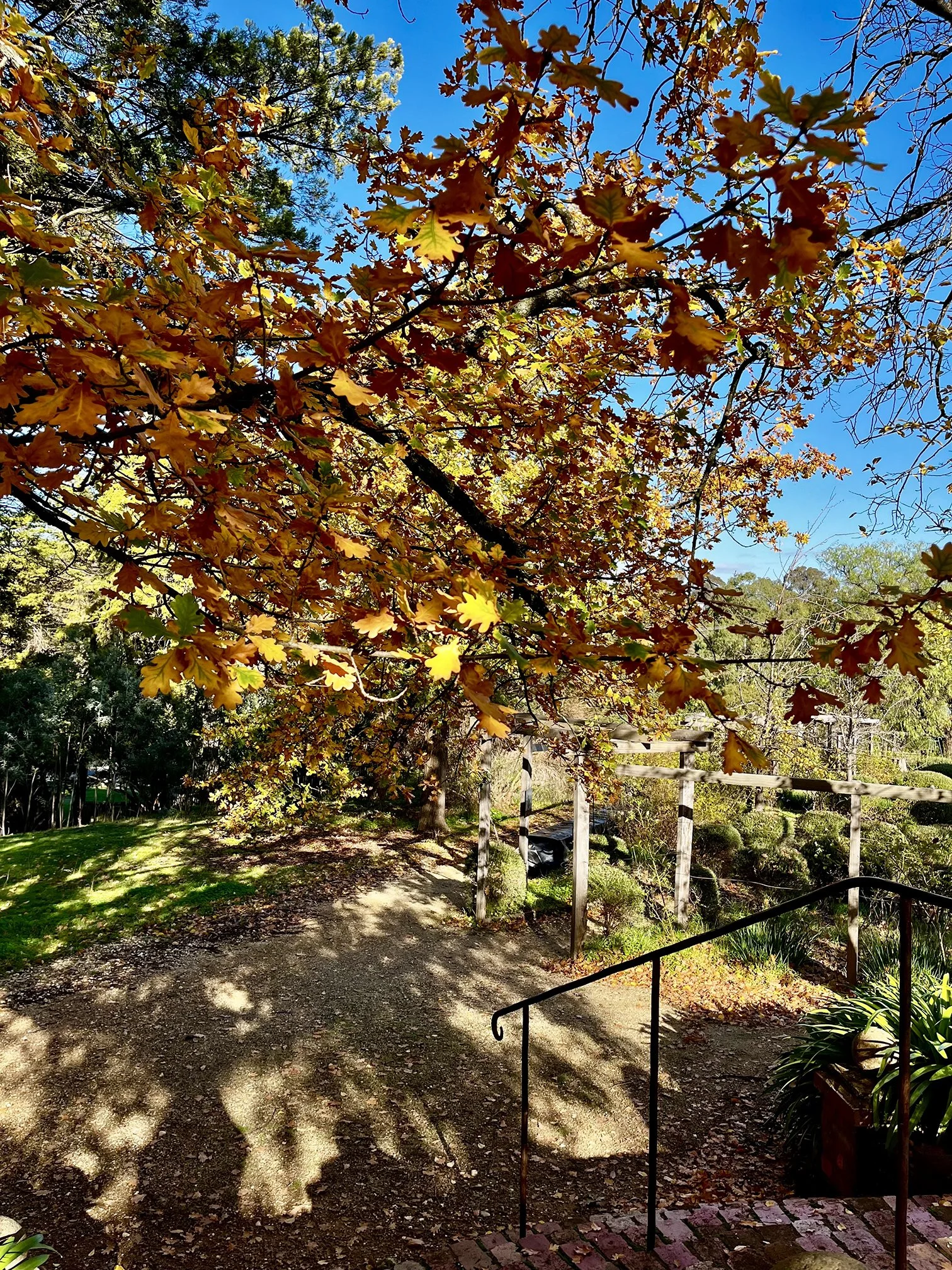
Just a short, uphill walk from Castlemaine's centre, Buda was home to the large Leviny family for 118 years. Purchased by Hungarian-born jeweller and silversmith Ernest Leviny in 1863, the property grew into a three-acre garden that remains remarkably intact today. In fact, it is considered one of Victoria's most significant surviving historic house-and-garden estates.
As I walked, I learnt that Ernest encouraged his many children to take an active role in the garden's development, allocating each a section of the grounds to tend. The garden became a shared project, enriched by the interests and efforts of different family members.
The site itself presented significant challenges. Like much of Castlemaine, Buda sits on land degraded by the gold rush, with a thin topsoil of gravel and clay. And like much of Central Victoria, it endures a harsh climate with extremes of temperature and long dry periods.
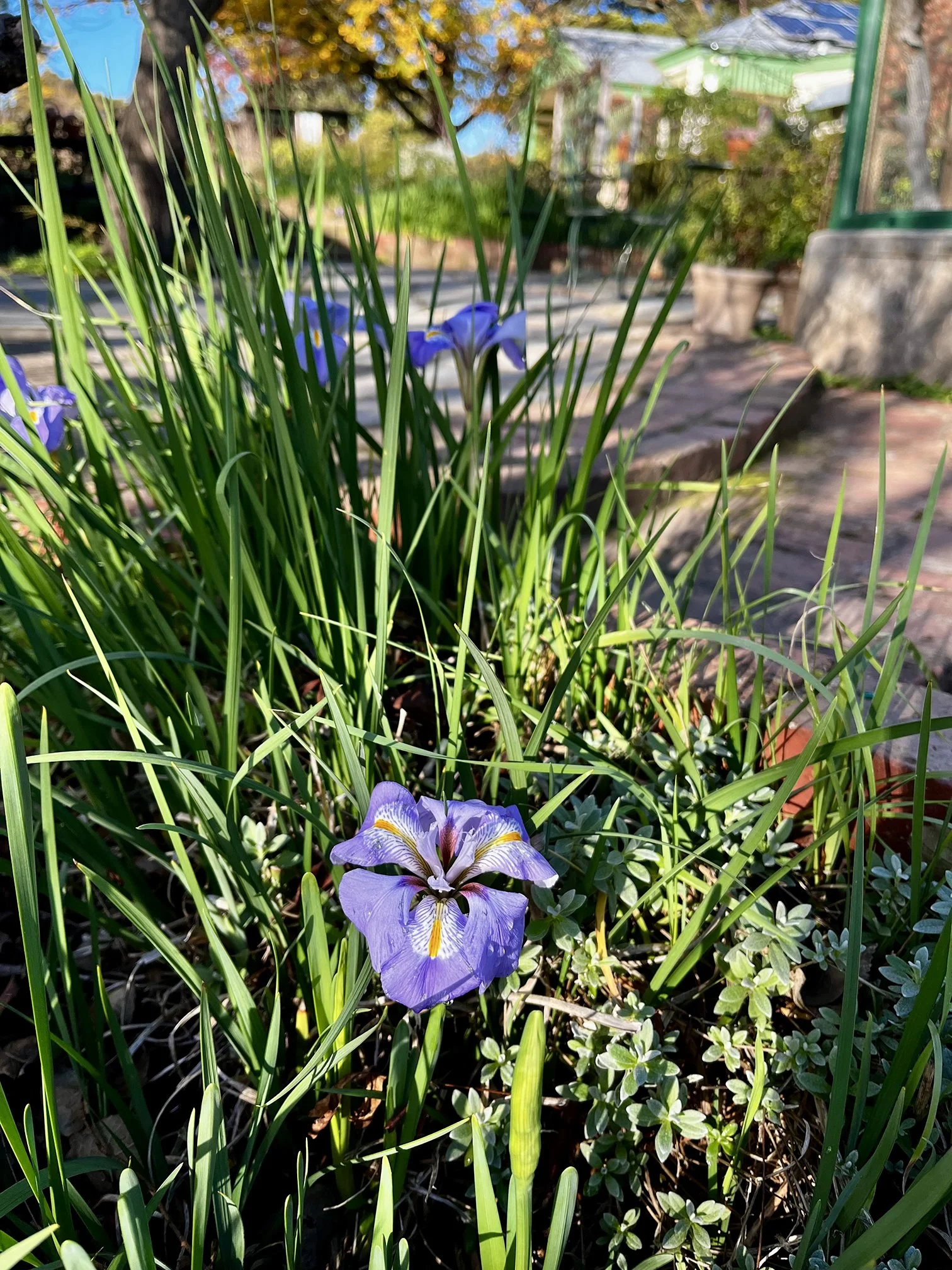
These tough growing conditions favoured resilient plant species. Many of these 'great survivor' plants remain in Buda’s garden today, reflecting a tradition of resourceful gardening and a deep understanding of the site. During my visit, Algerian irises (Iris unguicularis) were already flowering and naturalised drifts of Cretan tulips (Tulipa cretica) were also emerging. Both were planted in the garden’s earliest years.
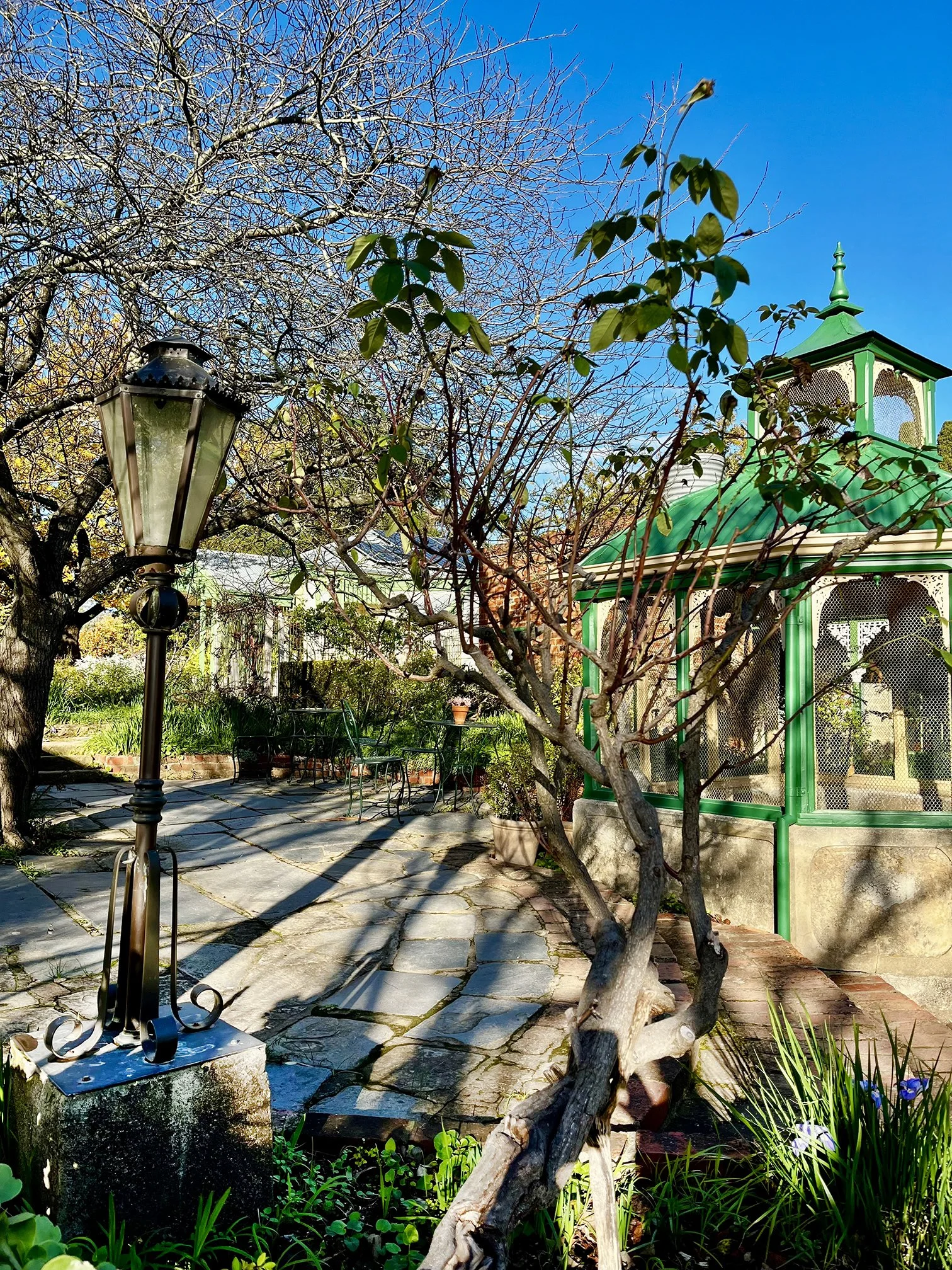
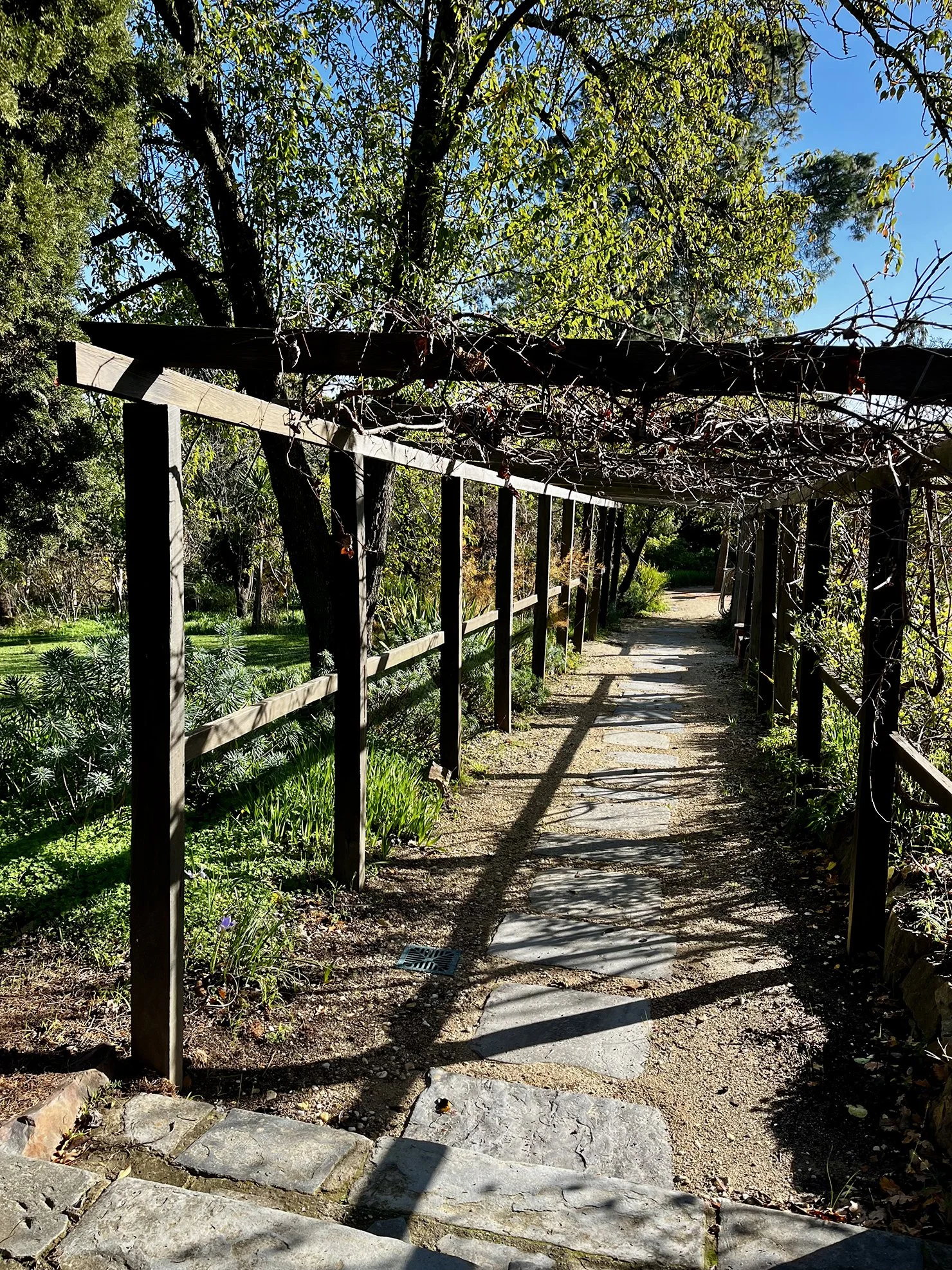
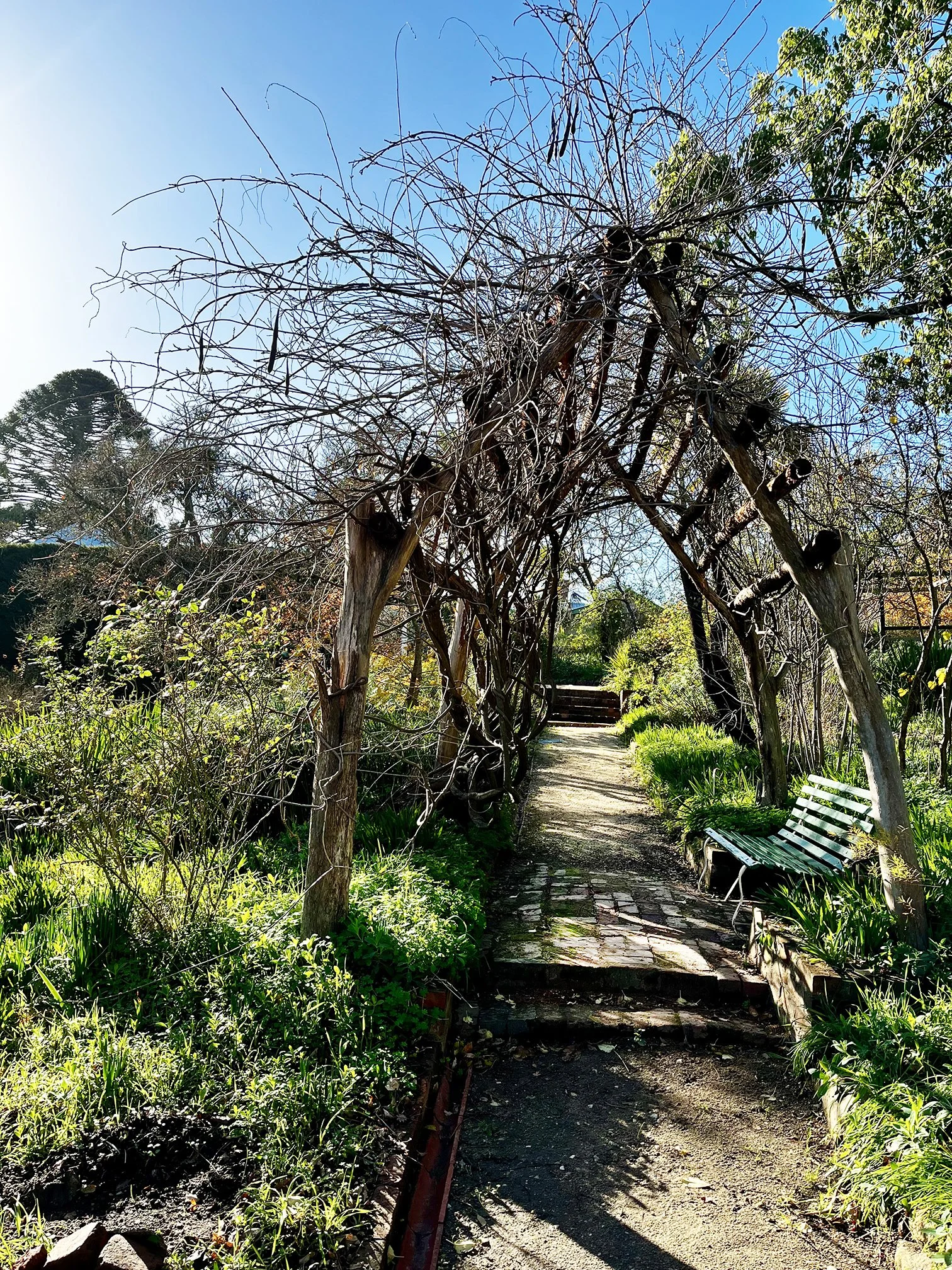
I was particularly drawn to Miss Hilda's Walk, named for Ernest's daughter Hilda Leviny, who devoted much of her life to the garden's care, continuing to work in it until her death in 1981, aged 98. The walk is one of the final sections of the garden to be directly shaped by a family member. On this sunny winter afternoon, sunlight threads through the bare, twisted branches of the wisteria, transforming the arch into a delicate tangle of light and shadow.
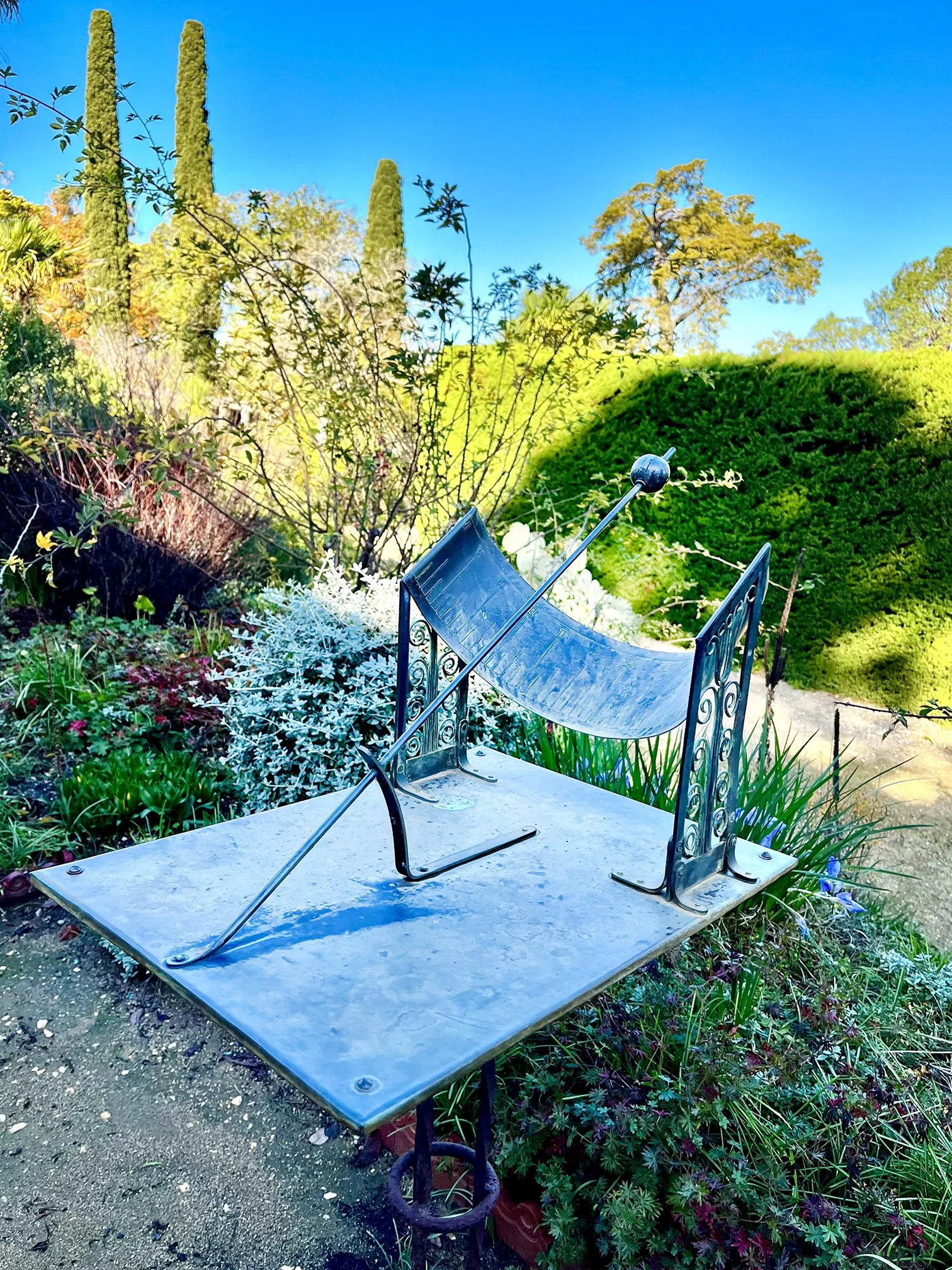
Personal stories are woven throughout the garden. Hilda’s sister Dorothy created much of the decorative metalwork, including a stunning Arts and Crafts-style sundial and small fountain, while a cherished geranium was reputedly carried from Hungary in Hilda's handbag. These small details bring a charming human element to the garden.
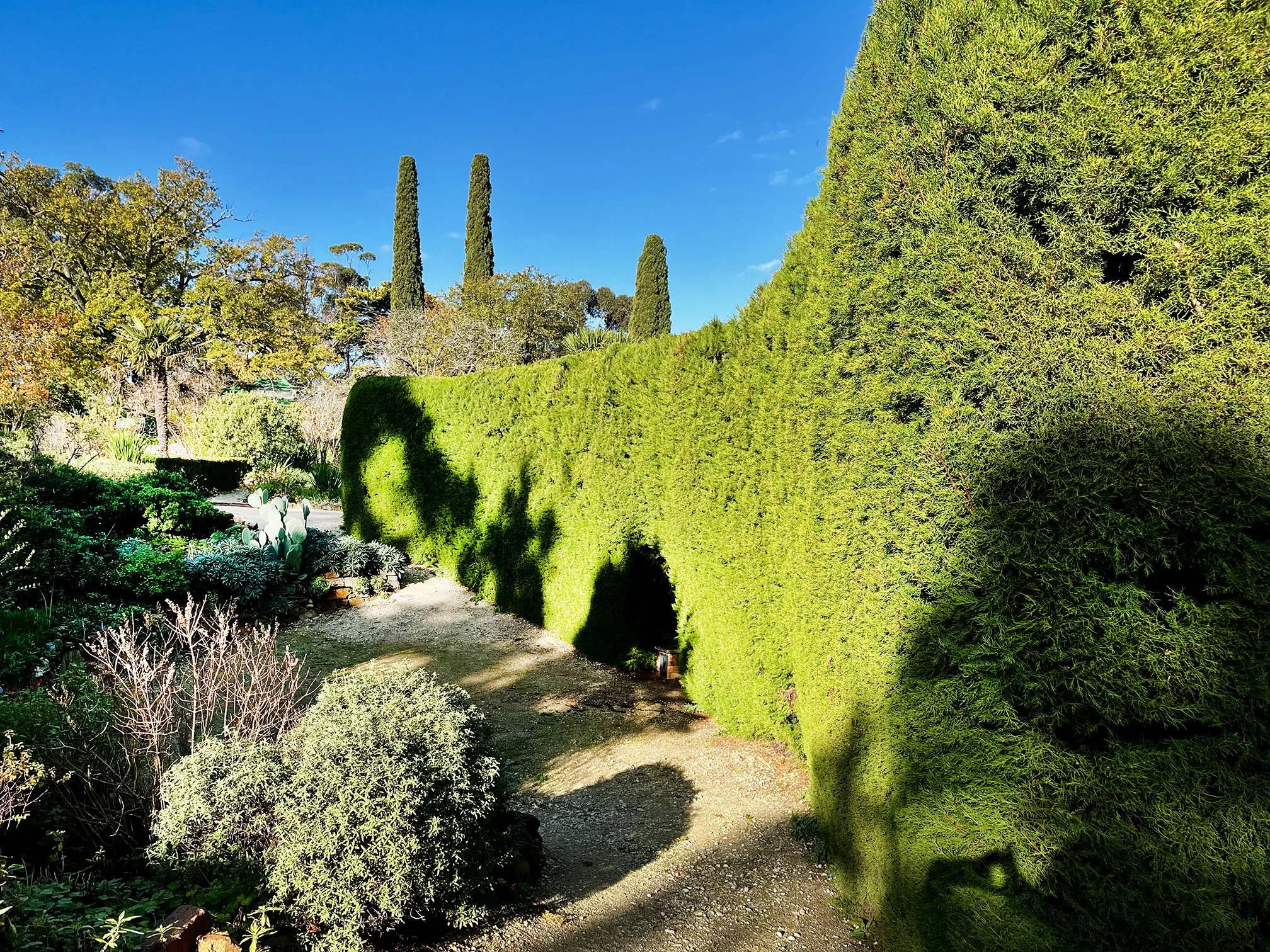
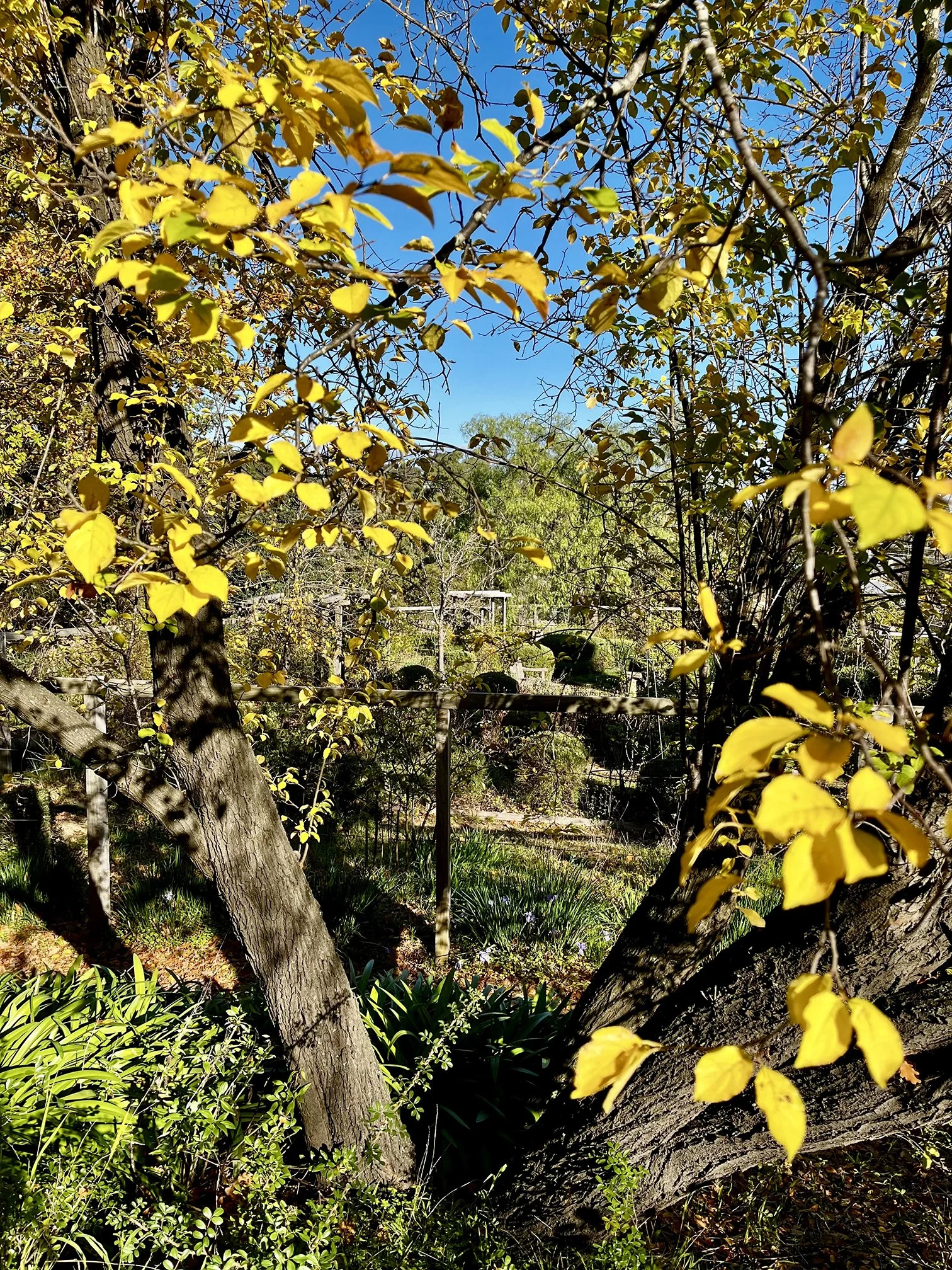
Perhaps the most striking thing about Buda is its integrity. Unlike many historic properties, the garden survives largely intact, preserving the vision of the family who created it. Today, gardeners and volunteers continue the careful work of maintaining paths, hedges and plantings, renewing ageing specimens with cuttings, and propagating them wherever possible.
My winter walk through Buda revealed a living record of family life and care that spanned more than a century. Every part had a story to tell, making Buda not just a historic garden but a landscape shaped by one incredible family that still speaks to visitors today.